PTO vs Engine-Driven Manure Pumps: How to Size One
For most farms running their own manure with existing tractors in the 200 to 300+ horsepower range, Hoover Ag's PTO pump covers the job.
What you’ll learn
The real difference between PTO and engine-driven manure pumps
How to size a pump to your hose, distance, and volume
When PTO is the right fit and when it isn’t
What specs actually matter beyond horsepower
How Hoover Ag’s PTO pump system fits into a working operation
Pump sizing is where dragline systems get built or broken
Everything in a dragline system runs off the pump. Hose diameter, toolbar width, how far you can push manure, how fast you can finish a field. All of it comes back to whether the pump is sized right for the job.
Operators looking at pumps run into the same first question: PTO or engine-driven. Both move manure. Both can be sized up to serious volumes. The right answer depends on your operation, your tractor fleet, and how much pumping you actually do in a year.
Here’s how to think about the decision and how to size the pump once you’ve made it.
What’s actually different
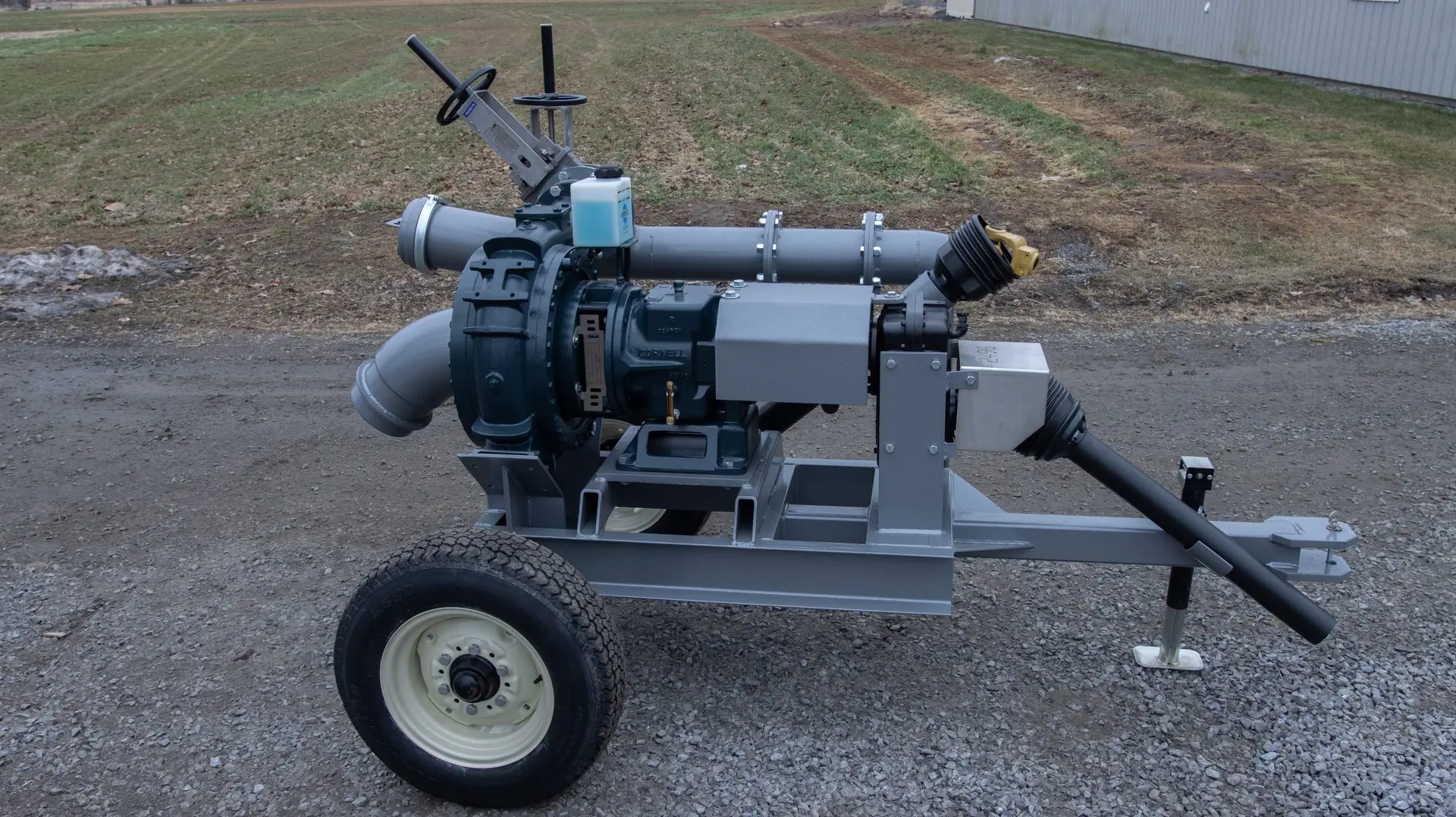
PTO pumps are powered directly by a tractor’s PTO shaft. The tractor provides the horsepower, the pump does the work. No separate engine, no fuel system of its own, no cooling system to maintain. When you need to pump, you back a tractor up to the pump and connect the PTO. When you’re done, you unhook and the tractor goes back to other work.
Engine-driven pumps have their own dedicated engine, usually a diesel sized specifically for the pump’s horsepower draw. They often sit on a trailer or skid and run independently of any tractor. Common in high-volume custom application operations and on farms where the pump runs for long enough stretches that tying up a tractor doesn’t make sense.
Hoover Ag’s PTO pump sits in the first category. For farms that already own tractors with the horsepower to drive a pump, running off PTO avoids the cost of a separate engine. Cornell pumps, which Hoover Ag also supplies, come in both engine-driven and PTO configurations depending on what fits the operation.
The two approaches aren’t competing for the same job. They fit different operations.
When PTO is the right fit
PTO pumping works well when a few things are true.
You own tractors with the horsepower. PTO pumping typically takes 200 horsepower or more for a serious dragline setup. Smaller systems can run on less, bigger ones need more. If your tractor fleet has the horsepower on hand, PTO uses what you already own.
You pump intermittently rather than continuously. If your pumping sessions run a few days at a time, a few times a year, the tractor isn’t tied up long enough to justify a dedicated engine. Hitch, pump, unhitch, move on.
You’re doing your own manure. Farm operations that spread their own manure usually pump less total volume per year than custom applicators do for multiple farms. The PTO approach fits that pattern.
You want simpler maintenance. No separate engine means no separate fuel system, no separate radiator, no separate electrical system. The tractor is already maintained. The pump itself is the only thing that needs service.
The AgTalk forums have decades of discussion from dairy operators running PTO Cornell and Doda pumps on 200 to 300 horsepower tractors. The setups work and the math pencils out when you already own the tractor.
When engine-driven is the right fit
Engine-driven pumping wins in other situations.
Continuous or near-continuous pumping. Custom applicators pumping for weeks straight don’t want a tractor sitting at the pump the whole time. A dedicated engine means the pump works while the tractor is free to pull the toolbar in the field or move to the next job.
Remote operation. Engine-driven pumps can be run from the field by remote control, which some operators prefer for safety and operational flow. PTO pumps need an operator physically at the pump.
Very high horsepower requirements. At the top end of the market, pumps need 400 to 500+ horsepower to move serious volume over long distances. Not every tractor fleet has a machine that size, and dedicating one to pumping takes it out of field service.
Multiple pump setups running simultaneously. Operations running booster pumps in-line to push over long distances usually run those on dedicated engines rather than coordinating multiple tractors.
If you fit one of these patterns, engine-driven is the stronger choice. For most farm operations outside this list, PTO handles the job for less money.
How to size a pump
Once you’ve picked PTO or engine-driven, sizing comes down to four variables. The Hoover Ag PTO pump product page is explicit about this: horsepower requirements depend on flow rate, hose length, head pressure, and manure consistency.
Flow rate (gallons per minute)
How much manure you want to move per minute at the toolbar. Most production dragline systems run 1,500 to 3,000 gallons per minute. Larger setups with bigger pumps and seven-inch drag hose can move 4,000 gpm or more. Smaller setups can run comfortably at 1,000 gpm or less.
Flow rate is driven by how much ground you need to cover in your available application window. If you have 1 day to apply 500,000 gallons, you need a system that can move at least 1,000 GPM
Hose length and diameter
Longer hose runs mean more friction, which means more pressure loss, which means you need a bigger pump to maintain the same flow at the toolbar.
Dragline hose typically runs 6 inches to 10 inches in diameter and lays flat when not pressurized. A 6-inch supply with a 5-inch drag hose at close range can deliver around 1,400 gpm with the right pump. Push the same setup out to a mile and that drops to around 1,000 gpm. To hold the higher flow at long distances, you have to move to 8-inch supply and 6 inch drag.
The relationship is linear enough that you can estimate pump horsepower from the hose size and distance. The exact numbers depend on your pump curve, but every extra 1,000 feet of mainline costs you some gpm.
Head pressure
Elevation changes between your storage and your field also matter. Pumping uphill costs pressure. If your lagoon sits at the bottom of a slope and your field is 50 feet higher, your pump is working against that lift the entire time your pumping
For most Pennsylvania and mid-Atlantic operations, elevation changes are modest enough that pump sizing is dominated by flow and distance. In hillier terrain, head pressure becomes a significant factor.
Manure consistency
Thicker manure is harder to pump than thinner manure. Dairy manure with higher solids content, lagoon sludge during cleanout, or any material with suspended solids draws more horsepower than thin slurry.
Pumps sized tight for average manure can struggle with thicker material. If your operation deals with both routine liquid and periodic cleanout work, size the pump for the harder job.
How much horsepower do I need for a dragline PTO pump?
Depends entirely on the four variables above. For a typical farm dragline system moving 1,500 to 2,000 gpm through 8-inch supply hose at one mile, 250 to 300 horsepower is a reasonable starting point. Smaller setups can run on less. Larger or longer-distance setups need more. Hoover Ag can match a pump to your specific flow, hose, and distance requirements.
What else matters beyond horsepower
Pump sizing isn’t just a horsepower calculation. A few other factors shape the system.
Pump curves and operating points. A pump that’s rated for your flow rate at your pressure isn’t necessarily running efficiently there. Matching the pump’s operating point to its efficient range extends seal and bearing life and reduces vibration. This is why pump selection should be a conversation with the supplier, not a horsepower-only decision.
Plumbing design and bypass systems. Pressure spikes during startup or at the end of a run can stress the pump and the hose. Proper plumbing with bypass systems and pressure control reduces system stress and improves reliability.
Cavitation protection. When a pump’s inlet conditions are wrong, the pump cavitates (forms vapor bubbles) and damages itself. Correct suction-side design matters as much as the pump’s horsepower rating.
Material compatibility. Not every pump handles abrasive material well. Lagoon cleanout slurry with sand content requires specific pump configuration and maintenance. The Hoover Ag PTO pump can handle sand with proper configuration, but you have to spec it that way.
Complete system support. Pumps don’t operate alone. Valves, pig launchers, bypass plumbing, and remote monitoring all contribute to a working system. Hoover Ag supplies full systems rather than just the pump itself, which simplifies the sizing conversation.
See It on Video
PTO dragline manure pump tips
A $95K booster pump with a CAT C13 engine and remote control
A 500 HP manure pump build for a dairy digester
How Hoover Ag’s PTO pump fits
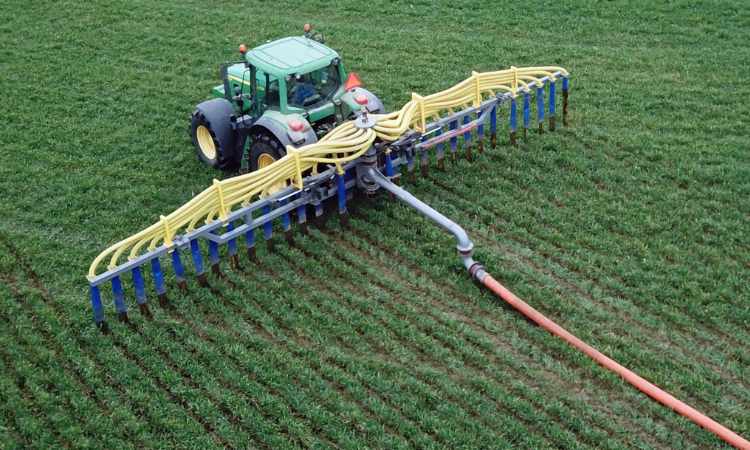
For most farms running their own manure with existing tractors in the 200 to 300+ horsepower range, Hoover Ag’s PTO pump covers the job. It pairs with the rest of the manure equipment lineup including hose reels sized for your drag hose capacity, 50 foot dribble bar for surface application, and dragline injectors when you want injection.
For custom applicators running at the top end of the market or operations with specific engine-driven requirements, Hoover Ag also supplies Cornell pumps in engine configurations.
The sizing conversation is where most of the money gets saved or lost. A pump that’s undersized for your system becomes the bottleneck that limits every application day. A pump that’s oversized is money spent on capacity you’ll never use. Getting the match right is worth a phone call before you order.
Call Hoover Ag at (610) 468-9666 or get in touch to spec a pump for your system. We’d rather spend the time on the sizing conversation than sell you the wrong setup.
The Hoover Ag 50 foot dribble bar uses a multi-hose precision outlet system that spreads manure across the full 50-foot working width. It fits to a dragline system. Compared to a splash plate, the dribble bar’s design does three things that matter.
If you haul or broker manure commercially in Pennsylvania, you need a certification, you need to maintain it with continuing education, and you need to keep records that prove you’re doing the work within the rules.
Biosolids are the nutrient-rich organic material produced when wastewater treatment plants treat sewage sludge to meet federal and state standards for beneficial use.