
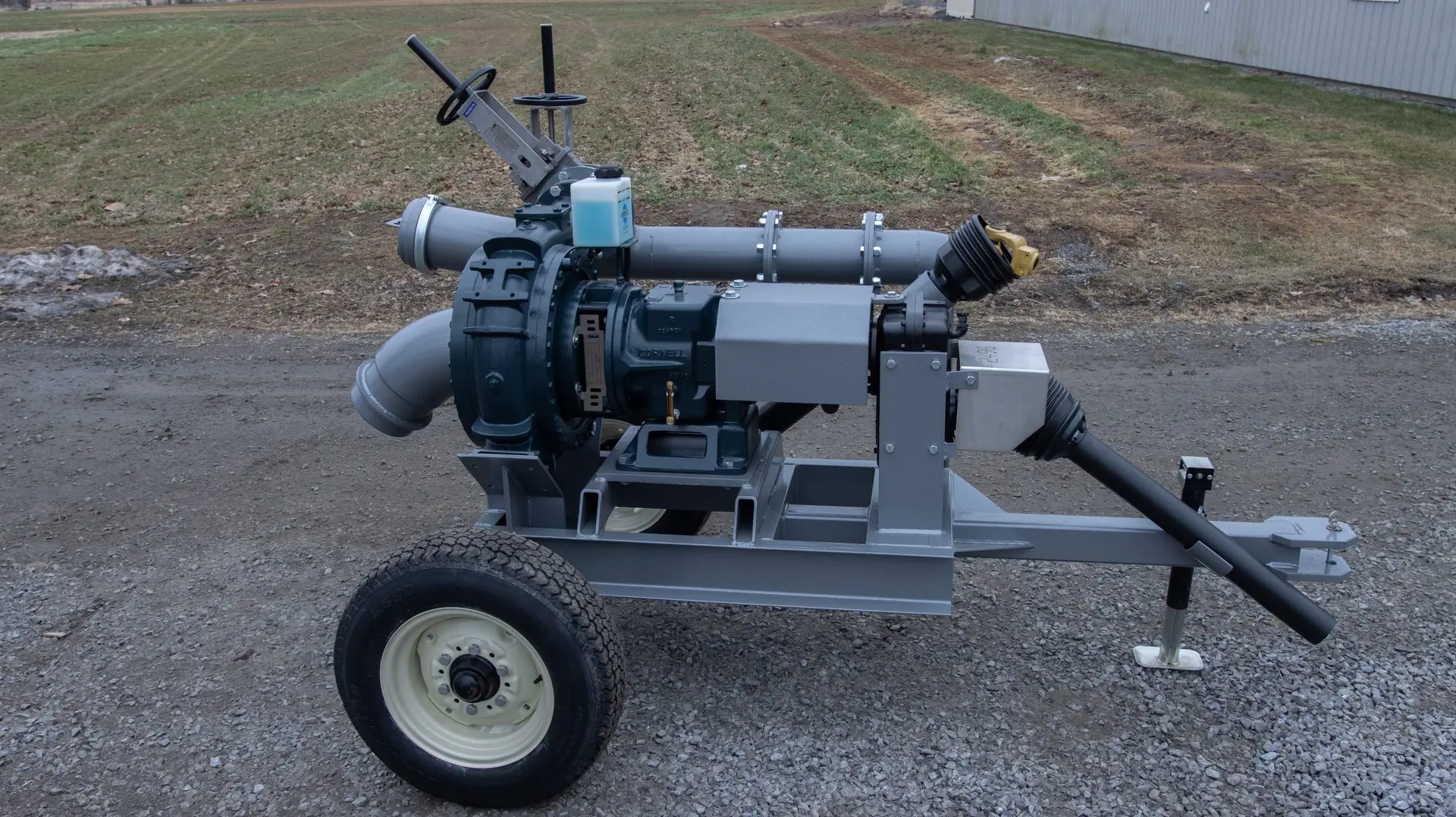
PTO vs Engine-Driven Manure Pumps: How to Size One
For most farms running their own manure with existing tractors in the 200 to 300+ horsepower range, Hoover Ag’s PTO pump covers the job.
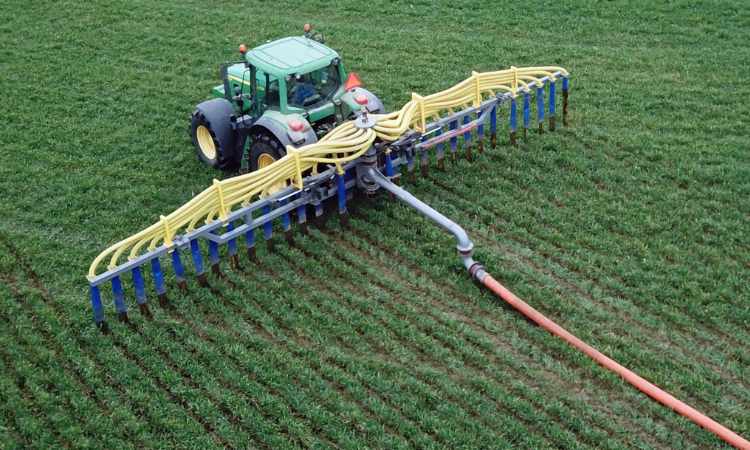
A dribble bar does something no other common manure applicator can do: apply liquid manure to a growing crop without hurting the crop. Injectors can’t do it well because they disturb the soil and the root system. Splash plates can’t do it well because the manure lands on leaves and causes burn. Tanker-mounted broadcast spreaders have the same problem.
A dribble bar places manure in controlled streams at the soil surface, beneath the canopy of the crop. On hay fields between cuttings, on small grains before heading, on cover crops that haven’t been terminated, the dribble bar is often the only tool that lets you apply when the field is in production.
That’s the differentiator. Here’s how dribble bars actually work, how to size one for your operation, and how to set up for in-season application.
A dribble bar is a wide boom with multiple distribution hoses hanging below it. Manure flows through the boom and out of each hose at low pressure, dripping onto the soil surface in parallel bands as the tractor pulls the bar across the field. The spacing between the hoses sets the application band pattern. The ground speed and the pump output determine the rate per acre.
The Hoover Ag 50 foot dribble bar uses a multi-hose precision outlet system that spreads manure across the full 50-foot working width. It fits to a dragline system. Compared to a splash plate, the dribble bar’s design does three things that matter.
It reduces airborne drift. Splash plates spray manure through the air, which is where most of the ammonia volatilization happens and where most of the odor originates. Dribble bars drop manure in controlled streams close to the ground. Less air exposure, less loss, less smell.
It applies more evenly. A dribble bar’s multi-hose outlet system distributes manure in parallel bands at consistent spacing. The result is a more uniform application pattern across the working width than splash plate spreading can achieve.
It works beneath the canopy. The dribble bar’s low-pressure outlet reaches under leaves and into the soil zone where plants will take up the nutrients. A splash plate coats the top of the canopy, which both wastes the application and can damage sensitive crops.
Dribble bar sizing comes down to matching the bar’s capacity to the rest of your system. A few things to think through.
Dribble bars typically come in widths ranging from about 30 feet up to 60 feet or more. The right width depends on your pump capacity, your field layout, and your tractor’s ability to pull the bar at speed.
The Hoover Ag 50 foot dribble bar sits in the middle of that range and fits the majority of operations. Fifty feet is wide enough to cover ground efficiently without being so wide that headland turns become a problem on standard field layouts.
Wider bars cover more acres per hour but need more pump capacity to maintain the per-acre application rate, more horsepower to pull, and more headland room to turn. Narrower bars are easier to handle but spend more time in the field for the same acres.
The dribble bar has to be fed. Your pump has to be sized to deliver enough gallons per minute at the bar’s working pressure to achieve your target application rate at your intended ground speed.
If your pump can only move 1,500 gpm and your 50-foot dribble bar is set up for a 5,000 gallons per acre rate, you can only drive about 3.3 miles per hour before you’re underapplied.
Tractor horsepower
Pulling a 50-foot dribble bar across soft ground with a full drag hose behind it takes real horsepower. Hoover Ag’s product page notes that horsepower requirements vary depending on system configuration, which is honest. The right number depends on soil conditions, drag hose length and diameter, ground speed, and whether you’re pulling on a slope.
As a rough starting point, operations running a 50-foot dribble bar with a dragline system usually have at least 200 to 250 horsepower on the tractor pulling the bar. Hoover Ag can match recommendations to your specific setup.
Depends on soil conditions, drag hose configuration, and ground speed. Most operations running a 50-foot dribble bar on a dragline system run tractors in the 200 to 300 horsepower range. Lighter conditions or shorter hose runs can work with less. Contact Hoover Ag for a recommendation specific to your setup.
Dragline-fed dribble bar setups are the most common configuration for serious manure volume. The tractor pulls the dribble bar across the field, dragging the hose behind it. The hose connects to the mainline running from the pump.
A few setup principles matter.
Headland depth for the bar’s working width. A 50-foot bar needs more turning room than a 16-foot injector. Plan the field pattern so the headlands can accommodate the turn without kinking the hose.
Drag hose management. The hose rides behind the tractor, not under it. On wider fields, a hose mover repositions the hose between passes to keep it from dragging across freshly applied ground.
Our blog on how to lay out a manure dragline in the field covers the layout planning side in more detail.
Tanker-fed dribble bars work the same way mechanically but with a tanker providing supply instead of a dragline. The tanker carries the manure to the field, feeds the dribble bar directly, and refills from the pump or storage between loads.
Tanker operation is simpler for smaller fields and scattered applications. The tradeoff is tanker weight on the field, slower turnaround per load.
Many operations end up with both options available. Dragline for the big fields near storage, tanker for the outlying ones.
This is where the dribble bar earns its unique place in the lineup.
In-season application on growing crops is becoming a bigger part of the manure application calendar. Nitrogen applied to a crop at the time the crop actually needs it is used more efficiently than nitrogen applied in the fall or spring that has to wait for the crop to come up. For hay fields taking multiple cuttings per year, applying manure between cuttings matches the nitrogen application to the regrowth cycle. For cover crops being planned as forage, applying manure to the growing cover feeds the biomass that eventually gets harvested or terminated.
The dribble bar is the tool that makes in-season application practical.
Hay fields between cuttings benefit most. Applying immediately after a cutting, before significant regrowth has started, puts the nutrients at the soil surface where the next cutting’s growth can use them. The low-profile dribble bar doesn’t damage the stand.
Small grains before heading can accept manure application when the crop is still short enough that the dribble bar passes above it without damage. Timing matters here, so coordinating with the agronomic plan is important.
Growing cover crops that will be chopped for forage benefit from in-season manure. The cover absorbs the nutrients and converts them into forage mass.
Established grassland can take dribble bar applications across the growing season, which spreads the nitrogen application over the time the grass is actually using it.
The alternative to a dribble bar for in-season application is a dragline injector designed specifically for low-disturbance work. Hoover Ag’s dragline injectors with the patented adjustable opener angle can handle grassland and small-grain cover crop injection without destroying the stand. For some operations, the injector is the right in-season tool because it preserves more nitrogen. For others, the dribble bar is faster and gentler on the crop. Which one fits depends on the operation.
Three main cases. First, when soil conditions are too wet or fragile for injection. Second, when the crop is tall enough that an injector would damage it but short enough that a dribble bar can pass above. Third, when speed matters more than the marginal nitrogen retention from injection.
When you need maximum nitrogen preservation, when odor is a sharp concern because of neighbors, when runoff risk is elevated, or when a nutrient management plan credits injection favorably. The June blog on manure injection vs surface application covers the comparison in more detail.
The decision between dribble bar and splash plate is simpler.
Splash plate spreading is older, cheaper, and more forgiving of equipment setup. It’s also the application method with the most odor, the most volatilization loss, the most crop damage risk, and the most airborne drift. For in-season application on anything other than bare ground, it’s not really an option.
The dribble bar costs more up front, requires more careful setup, and demands more pump and tractor capacity. In return it reduces nitrogen loss, cuts odor significantly, and makes in-season application practical. For operations that apply nitrogen that costs real money, that have to think about neighbors, and that want to apply when the crop can actually use the nutrients, the math favors the dribble bar.
The Hoover Ag 50 foot dribble bar is designed for operations serious about efficient manure application. It pairs with the rest of the manure equipment lineup: PTO pumps, hose reels, and dragline injectors for the operations that need both surface and injection capability.
Call Hoover Ag at (610) 468-9666 or get in touch to talk through sizing and setup for your operation. We build the equipment and we’d rather help you spec the right configuration than sell you the wrong one.
For most farms running their own manure with existing tractors in the 200 to 300+ horsepower range, Hoover Ag’s PTO pump covers the job.

If you haul or broker manure commercially in Pennsylvania, you need a certification, you need to maintain it with continuing education, and you need to keep records that prove you’re doing the work within the rules.
Biosolids are the nutrient-rich organic material produced when wastewater treatment plants treat sewage sludge to meet federal and state standards for beneficial use.